
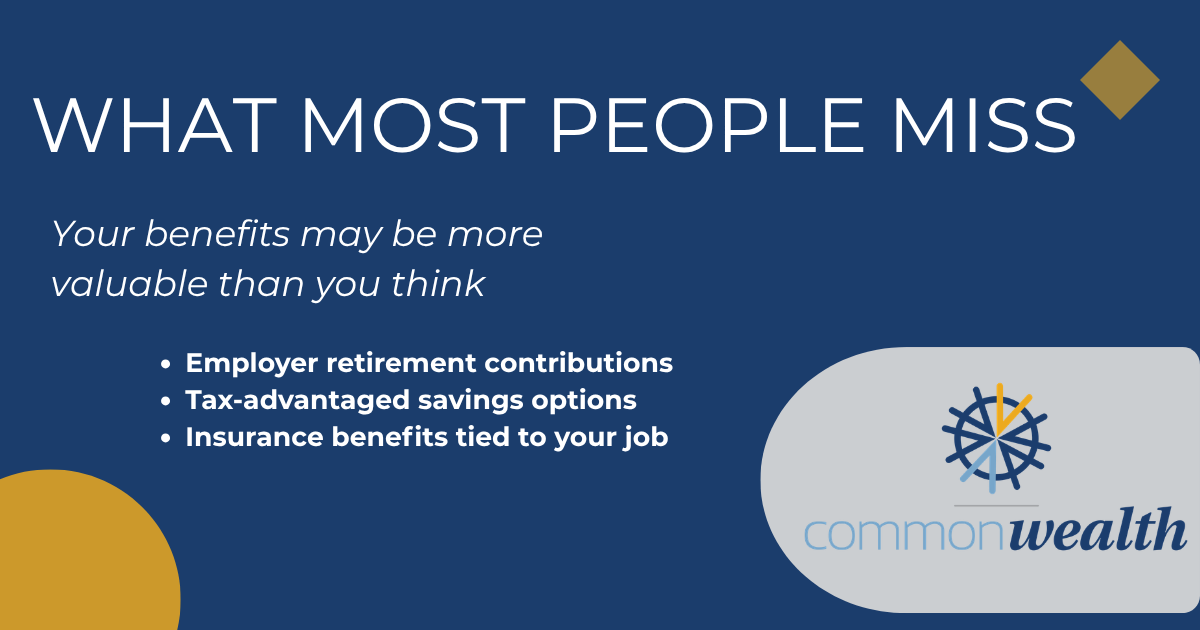
Your Employee Benefits Are More Valuable Than You Think (Here’s Why)
Insights Financial PlanningYes, your employee benefits may be worth far more than you realize. Beyond your paycheck, benefits such as employer retirement matching, health insurance subsidies, disability coverage, life insurance, and Health Savings Accounts (HSAs) can significantly impact your long-term financial success. The problem is that many people only review these benefits during open enrollment and rarely revisit them afterward. As a result, valuable opportunities often go unused.

Most People Focus on Salary and Overlook Total Compensation
When people think about compensation, they usually think about income. It's natural to focus on your salary, hourly wage, or annual bonus because those numbers are easy to see.
However, many employers provide additional benefits that carry substantial financial value. Depending on your employer, these benefits may include:
- Employer-sponsored retirement plans
- Matching retirement contributions
- Health insurance subsidies
- Life insurance coverage
- Disability insurance
- Health Savings Accounts (HSAs)
- Flexible spending and wellness programs
While these benefits may not appear in your bank account each month, they are still part of your overall compensation package.
Why Benefits Often Get Ignored
Most people don't intentionally overlook their benefits. Life simply gets busy.
You enroll when you start a job, make a few elections during open enrollment, and then move on to other priorities. Years can pass before those decisions are reviewed again.
Unfortunately, financial opportunities are often missed this way. Not because of one major mistake, but because small decisions remain unchanged as your career, income, and family circumstances evolve.
Three Benefits Areas Worth Reviewing
1. Retirement Matching
One of the most common missed opportunities involves employer retirement matching.
Many employees know their employer offers a match, but fewer understand exactly how much they need to contribute to receive the full benefit.
If you're contributing below the matching threshold, you could be leaving valuable employer contributions on the table. Over time, those missed dollars can compound and create a meaningful difference in retirement savings.
2. Health Savings Accounts (HSAs)
For eligible employees, HSAs can be one of the most flexible financial tools available.
Many people use HSAs only to pay current medical expenses. While that's certainly one option, these accounts can also play an important role in long-term financial planning.
Understanding how an HSA fits into your overall financial strategy may help you maximize its potential value over time.
3. Insurance Coverage
Many employers provide some level of life insurance and disability insurance coverage.
These benefits can provide important protection, but coverage needs often change as life changes.
Marriage, children, increased income, debt obligations, and business ownership can all affect how much protection may be appropriate. Reviewing your coverage periodically helps ensure your benefits continue to align with your financial responsibilities.
Why Benefits Matter More as Income Increases
As income grows, employee benefits often become even more valuable.
Tax advantages may become more meaningful. Employer contributions can represent larger dollar amounts. And the cost of overlooking opportunities may increase significantly.
For professionals, business owners, and high-income households, optimizing benefits can become an important component of an overall financial strategy.
The Bottom Line
Many people assume financial progress requires finding a new investment, a new strategy, or a new opportunity.
Sometimes that's true.
But sometimes the next opportunity is already available through the benefits package you have today.
Taking time to review your employee benefits can help you better understand your compensation, identify overlooked opportunities, and ensure your benefits are supporting your broader financial goals.
If you haven't reviewed your benefits recently, now may be a good time to start.
FAQ
How often should you review your employee benefits? You should review your employee benefits at least once per year during open enrollment. It's also smart to review them after major life events such as marriage, having children, changing jobs, receiving a significant raise, or purchasing a home. These events can affect retirement contributions, insurance needs, and tax-planning opportunities.
What is the most commonly overlooked employee benefit? Employer retirement matching is one of the most commonly overlooked employee benefits. Many employees participate in their workplace retirement plan but do not contribute enough to receive the full employer match. Health Savings Accounts (HSAs) are also frequently underutilized because many people only use them for current medical expenses instead of considering their long-term financial benefits.
Why are employee benefits important for financial planning? Employee benefits are important because they can improve retirement savings, provide valuable insurance protection, and create tax advantages. Benefits such as 401(k) matching, HSAs, life insurance, and disability insurance can have a meaningful impact on your overall financial plan and long-term financial security.